

Photographing the Milky Way Over the Pawnee Buttes
Join me on my adventure to scout and photograph the Milky Way over the Pawnee Buttes in Colorado.
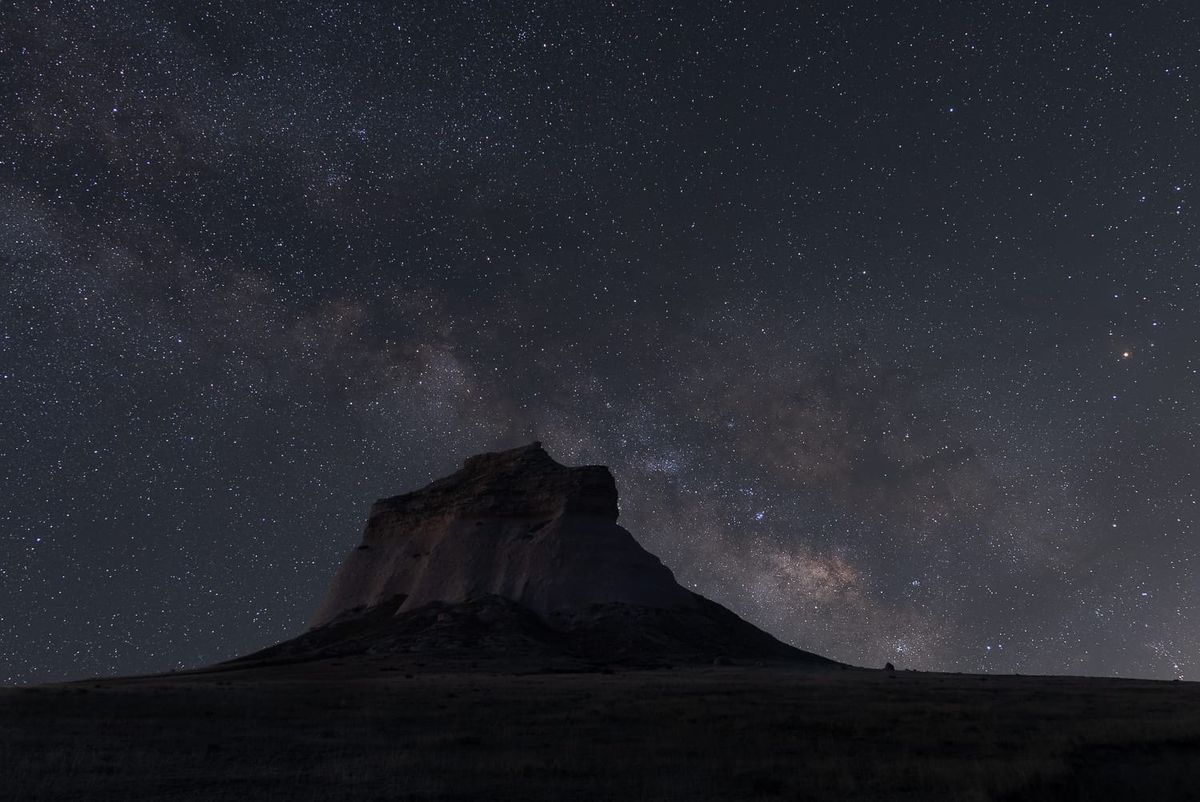
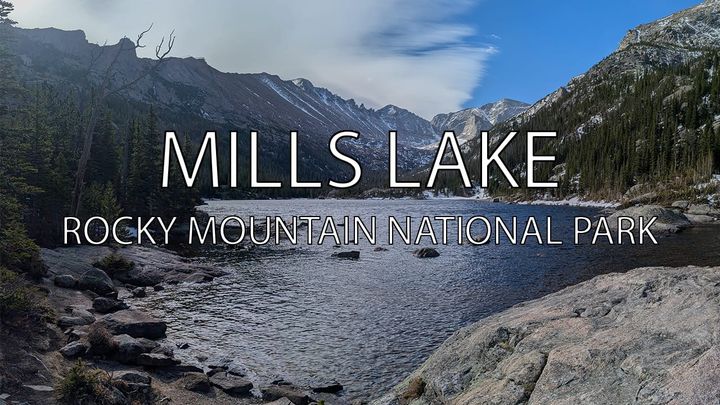
Last week, I went scouting around Mills Lake in Rocky Mountain National Park to see if I could find a good composition to shoot the Milky Way. I encourage you to check out that little adventure, but long story short, the location just didn't work for the Milky Way this early in the season.
After realizing that location wasn't going to work, I was racking my brain trying to think of a back up. Looking at various places in PhotoPills, I was pretty sure that the Pawnee Buttes would work quite nicely.
I photographed the Milky Way here last year, but I wasn't completely satisfied with the results, so I was excited to give it another go.
First things first, however, I'd need to get boots on the ground and scout it. Time for another adventure!
Video
Scouting
While scouting can be an important part of any landscape photography trip, I think it's especially important for Milky Way photography. There are so many variables that go into planning a Milky Way shoot that it's crucial to scout beforehand.
With that in mind, I headed to the buttes with my lovely fiancée after work to get boots on the ground and check that the Milky Way would line up the way I wanted. We hiked out to the butte, and I checked the alignment of the Milky Way using PhotoPills. I was quite happy to see that everything would line up exactly the way I wanted.
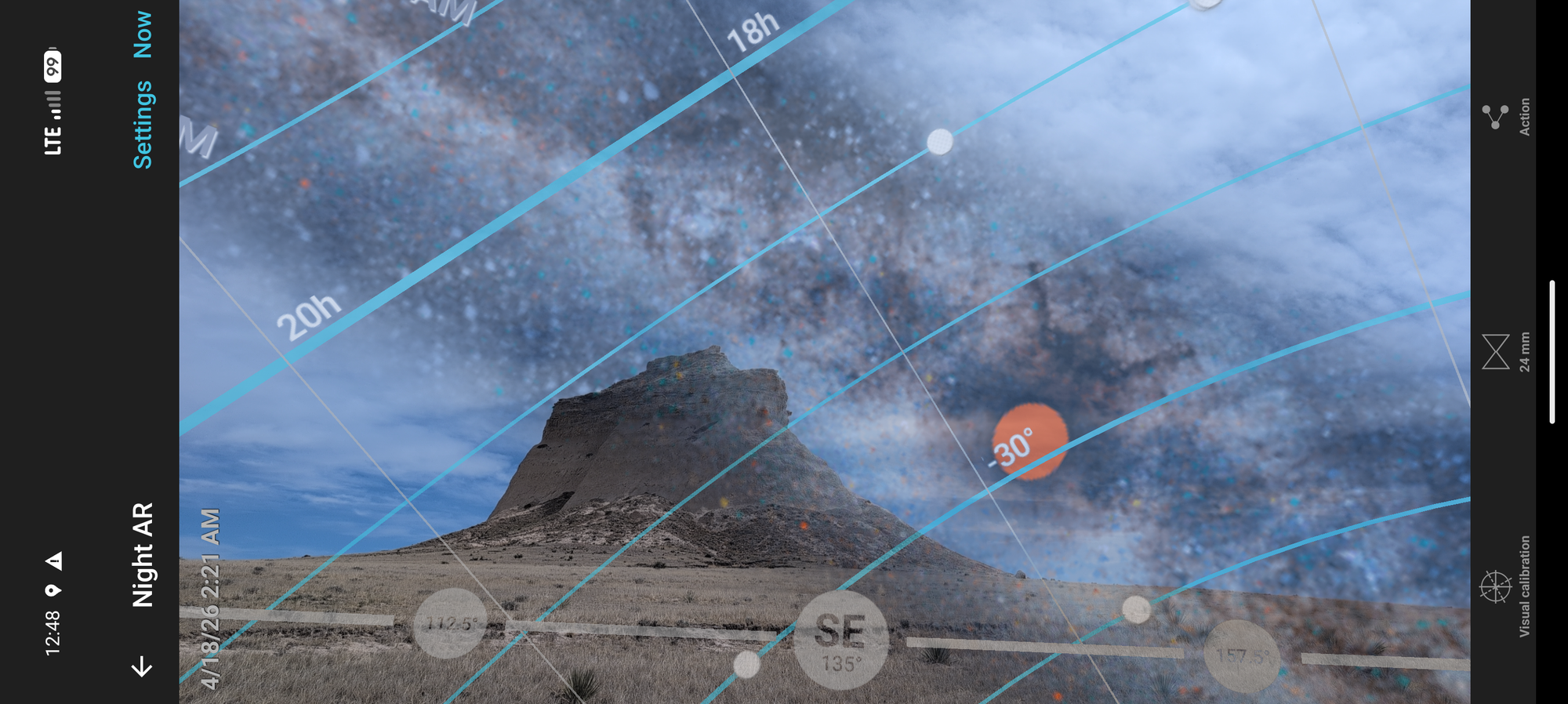
With this in mind, I knew this shoot would be a go.
Attempt One
I had first returned to the Buttes just a couple of days later, on Saturday. I intended to camp and hike out early Sunday morning to photograph the Milky Way. This simply wasn't meant to be, however.
For starters, the wind was horrendous, gusting up to around 40-50mph. As if this wasn't bad enough, there was a weird haze in the sky. I may have been willing to stick it out with the hope that things would clear up by the time I was ready to start shooting, but there was a bigger issue at play.
You see, one campsite over from me, a large group of men showed up. It was clear that they were, at a minimum, drinking. This, in and of itself, wouldn't be a big deal, except they were also handling firearms. Predictably, they were being less than responsible with said firearms.
With all of this in mind, and not wanting to be shot by some drunk idiot, I decided to cut my losses and head home.
This shot would have to wait.
Getting the Shot
A couple of days later, I was sitting at work, slightly bummed that I wasn't able to get the shot that I had already put so much time into scouting. I decided to check the conditions and was quite surprised to see that Monday night into Tuesday morning looked like the perfect opportunity to get out and get the shot.
The opportunity was too great to pass up, so I moved around my calendar such that I could get out and reattempt the shoot.
Monday, after work, I loaded up my car and made the 2-hour drive to the Pawnee Buttes. I set up my camp in the same spot I had been just a few days earlier. Luckily, there were no irresponsible gun owners around this time.
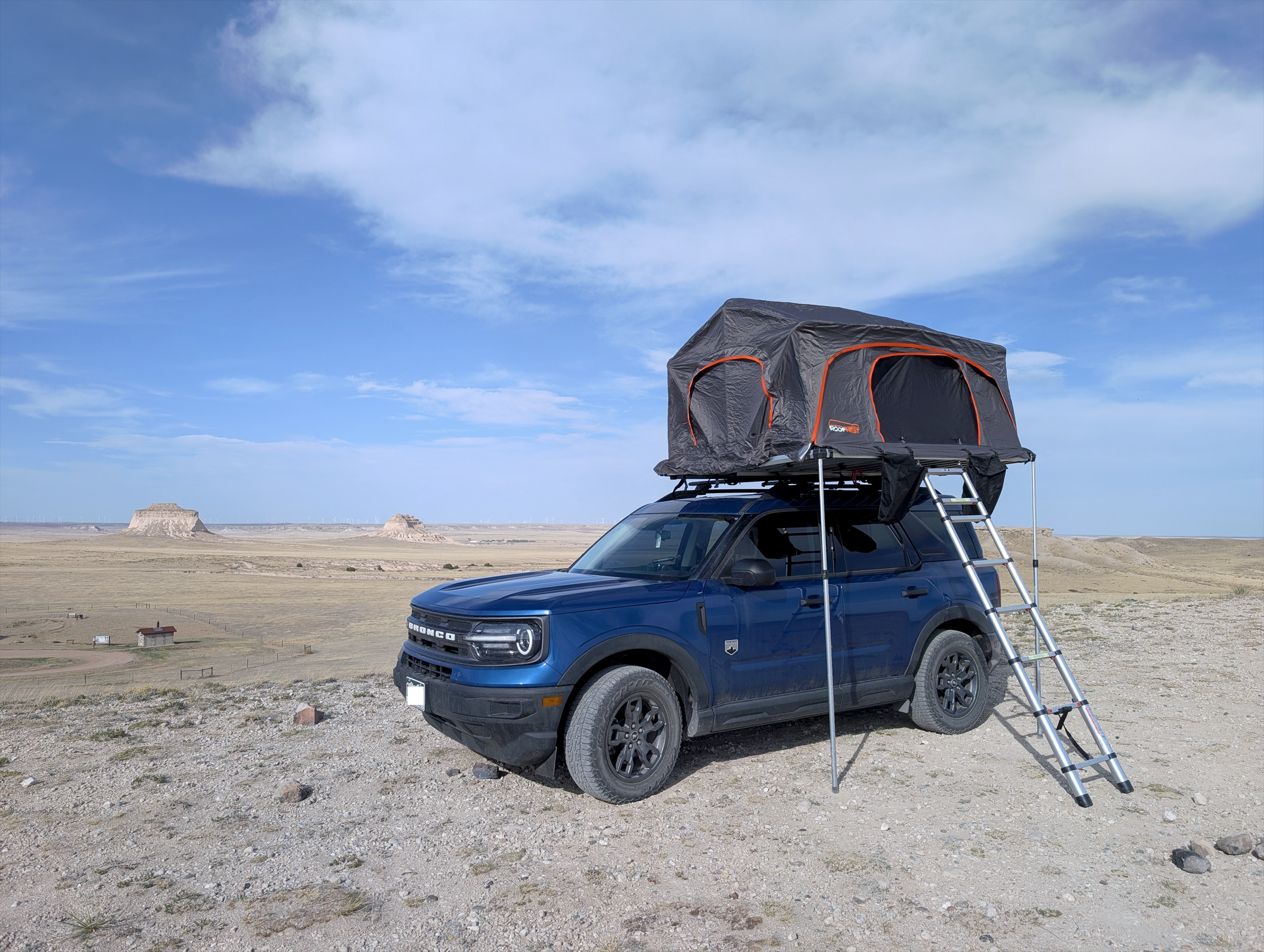
I got a few hours of sleep and got up a bit before 1 am to hike to the spot I wanted to shoot from. Once there, I got all of my gear set up.
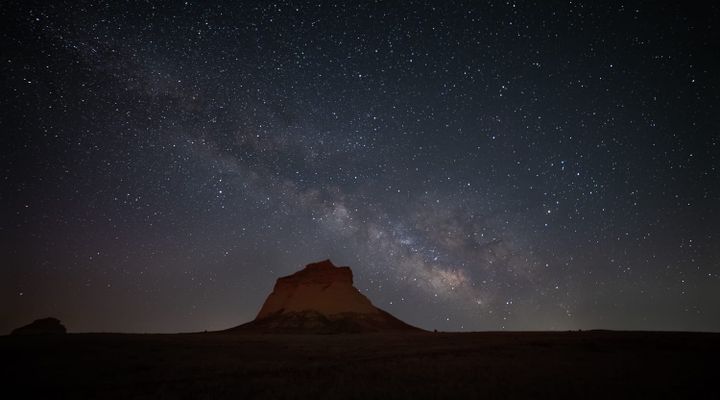
Usually, when I shoot the Milky Way, I simply take several shots and stack them. This time around, however, I was anxious to give my star tracker a try. I decided that, not only was I going to track the sky, but I'd also stack them. This should give me an extremely clean Milky Way with very little noise.
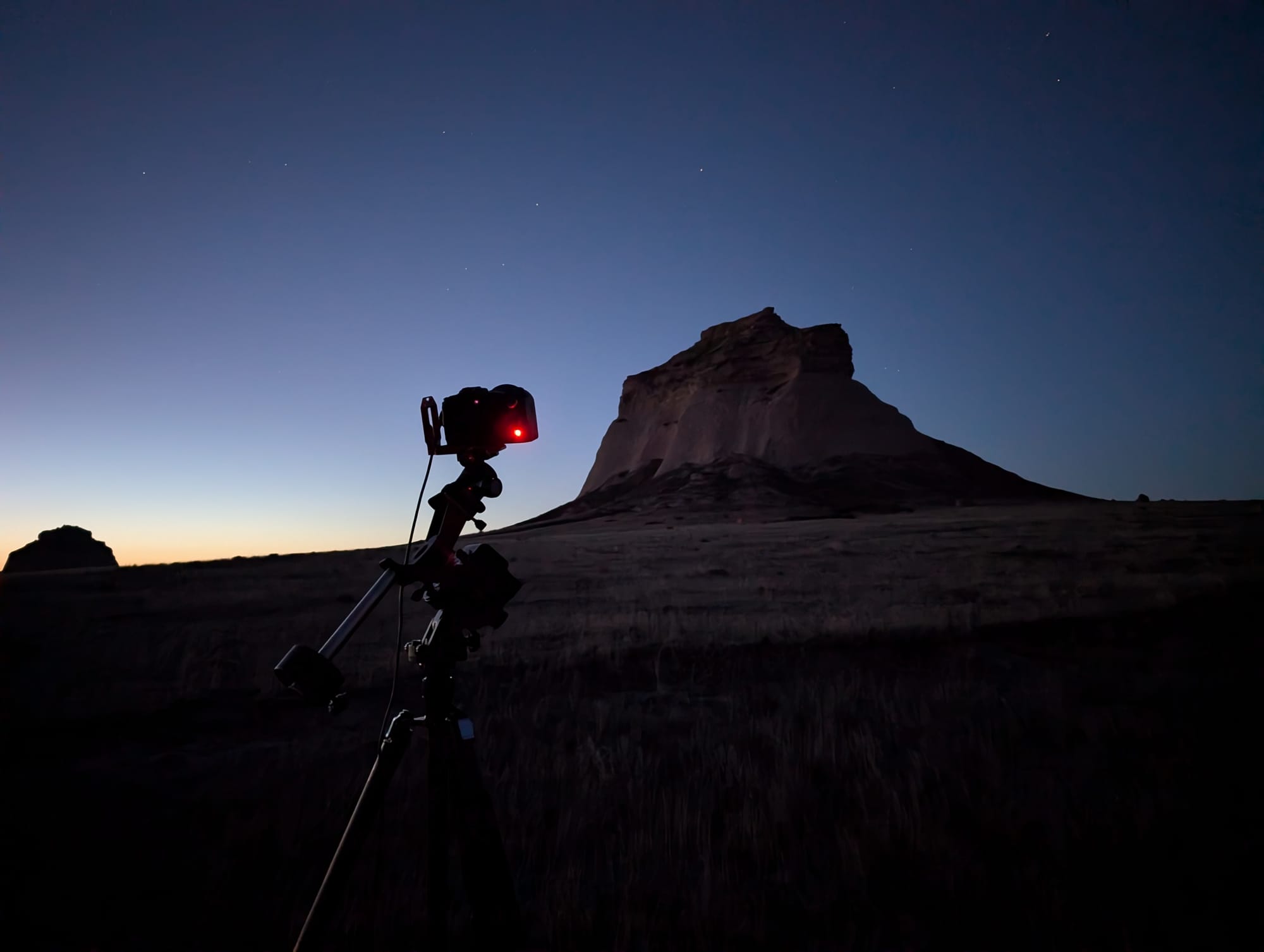
After experimenting with my exposure settings, I initially settled on shooting the sky at f/5.6, ISO 800, and a 3-minute shutter speed. I shot 15 frames with these settings. Once I finished shooting these frames, however, I decided to try another set of frames at a 4-minute shutter speed.
I ended up using the longer exposure ones, and, in hindsight, I kind of wish I had tried an exposure that was a bit longer.
For the foreground, I waited until it started to get a bit brighter out so there would be some light on the butte. This allowed me to have plenty of detail in the foreground for when I blended the sky in later.
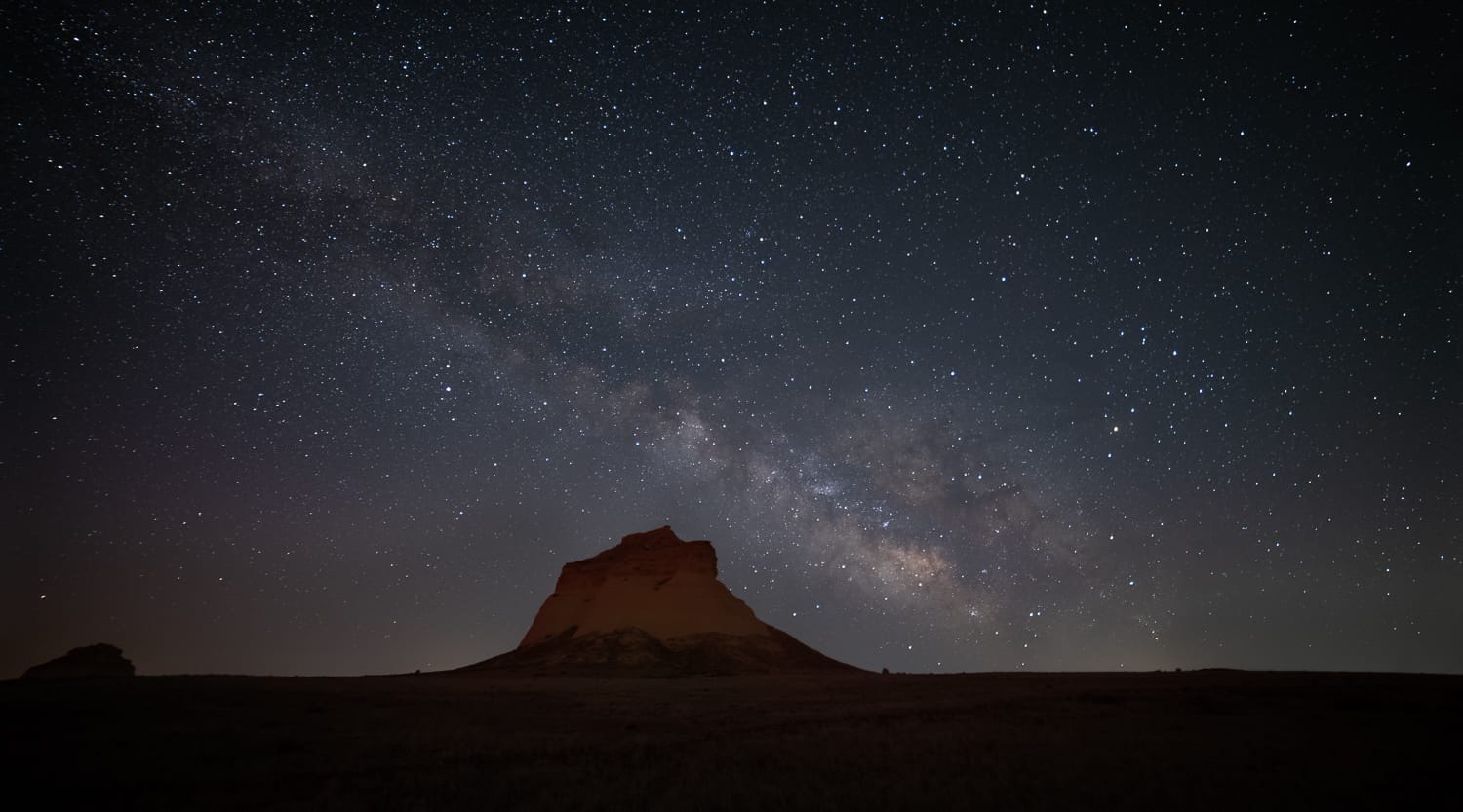
After being out shooting all night, I returned home and edited the image. I'm very happy to say that I'm extremely pleased with the result.
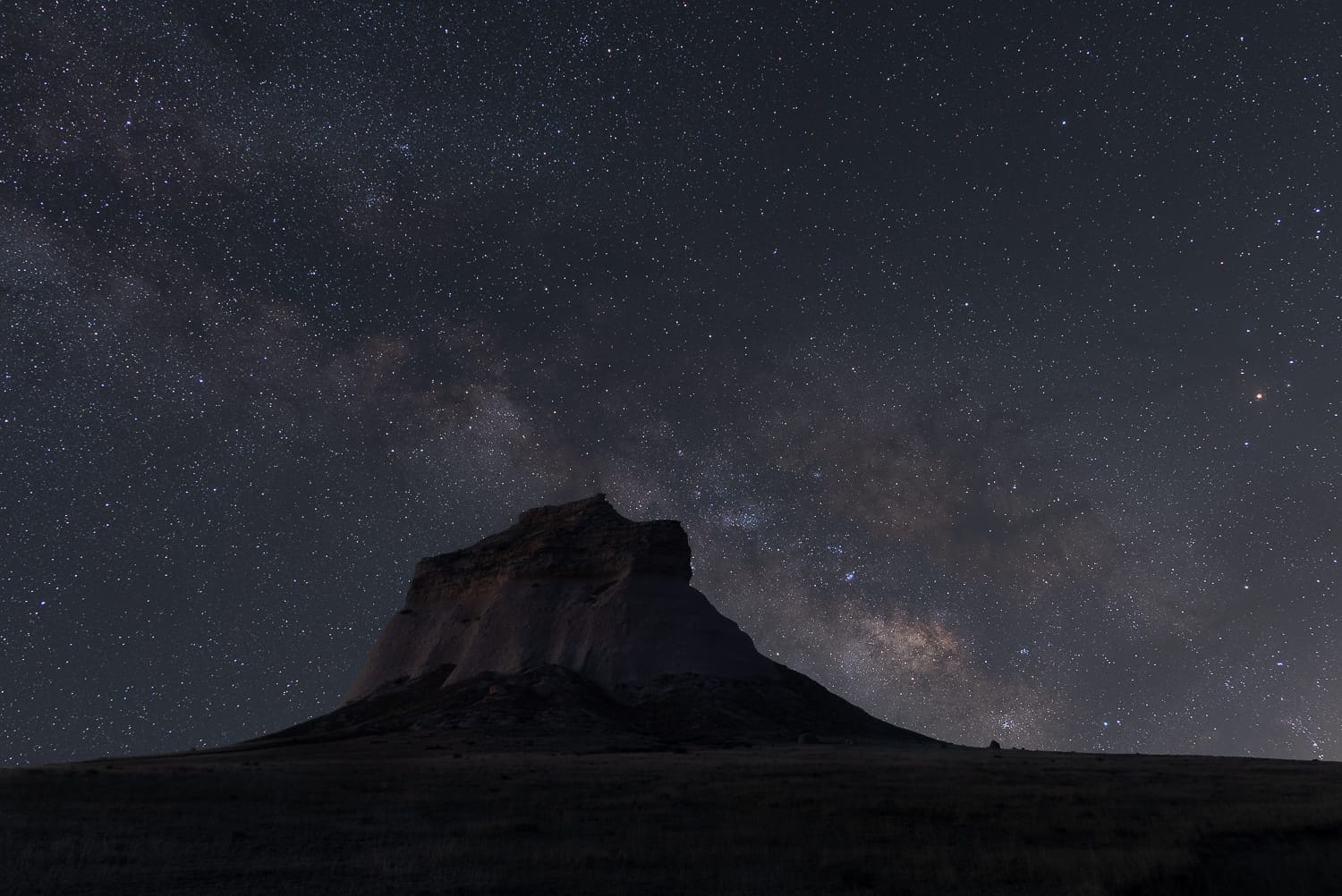
Considering this was my first time using my star tracker (excluding the time I used it to photograph the solar eclipse), I am extremely pleased with the results. That's not to say that I didn't learn a bunch from this process. There are plenty of things I plan to tweak in the future, but I'm excited to do some more Milky Way photography utilizing my tracker!
Comments ()